

Suore Terziarie Francescane Regolari - Firenze -Italia


.png)
Charisma
Our way of life in the spirit of St. Francis of Assisi
Interior recollection while working
In the footsteps of St.Francis
The identity of our Institute is implied in its name: “Franciscan Tertiaries”. 2Originating as “Sisters of Penance” in the Third Order we draw our charism from St. Francis of Assisi.* 3Our programme of life is the Gospel radically lived by our Seraphic Father. He himself stated: “This is what I wish, this is what I seek, this is what I long to do with all my heart

All of us strive to achieve a progressive, ongoing conversion, indispensable for entrance into the Kingdom of God. We dedicate ourselves to the various forms of the “works of mercy”. We recall that St. Francis “embarked on a life of penance”, showing “mercy” to lepers and “from that moment, what had previously seemed bitter became a source of spiritual and physical consolation to him”. Both in life-style and the performance of these works, we are committed to follow and bear witness to Christ; in the footsteps of St. Francis, living the principal elements of Franciscan spirituality: “minority”, fraternity, simplicity and joy, virtues which have always characterized this institute.

The Order of Penance
& a continuous conversion
The first 12 women were already Tertiaries and lived the spirituality of the Third Order, known as the Order of Penance.
Penance, as our Father Saint Francis understood, consists of a continuous conversion, a conversion that occurs in the heart of those who have encountered Christ. This was also the experience of the young Francis, who was reached by the Word in the silence of the little church of San Damiano and in the encounter with the leper whom he approached and kissed, doing violence to himself.
This gesture was crucial to his conversion, in fact after this encounter he decided to despise himself more and more... and with enthusiasm he repeated: "This is what I desire, this is what I long for with all my heart." After hearing the voice of the Crucifix in the little church of San Damiano, and with the arrival of the first friars, Francis did not continue his life as he had understood it until then, but wanted to know what God wanted from him. He thus turned to the Pope for permission to live with his brothers in the strictest poverty. Francis thus became a model of evangelical life also for the Franciscan Tertiary Sisters Regular, called to follow the same path.
.jpg)
First Apostolate: witness of life
Aware that our apostolate consists primarily in a witness of life, in addition to the duty of setting a good example recommended so much by St. Francis, we realize our mission in the Church in the following ways: the moral, intellectual and religious education of infants, children and youth; pastoral work in parishes; assistance to the sick and the elderly, whom we serve, when possible, even in their homes; and other charitable works of social assistance, in keeping with the Franciscan spirit of the Institute and its concrete possibilities and with the needs of the society in which we live. (C.1.4)
In solidarity with those who suffer situations of misery and injustice
While we renounce the possession, the free use and the disposal of money, we thank the Lord for the goods which are offered us through the fraternity, which we ought to serve with a sense of Franciscan responsibility.
Freed from the slavery of material goods, we share with the poor, within the possible limits of what we possess, the fruits of our work and the gifts which we receive, in solidarity with those who suffer situations of misery and injustice, so as to sustain their hopes and dedicate ourselves to advancing them in every way. In fact, the option for the poor is innate to the dynamic workings of love in keeping with Christ’s example.(C.7.4)

As for the manner of work, the first Directory exhorts us: “In working, see to it that you never lose your interior recollection, nor your temper nor be disturbed for whatever reason. Flee from hurry and anxiety. This keeps us from being recollected in God and makes us susceptible to get angry at every little obstacle which is encountered in our work”. (C.7.7)

As they announce peace with their lips, let them be careful to have it even more within their own hearts. No one should be roused to anger or insult on their account; rather, all should be moved to peace, kindness and harmony because of their gentleness (L3C 58). The sisters and brothers are called to heal the wounded, to bind up those who are bruised, and to reclaim the erring. Wherever they are, they should recall that they have given themselves up completely and handed themselves over totally to the Lord Jesus Christ. Therefore, they should be prepared to expose themselves to every enemy, visible and invisible, for love of the Lord because he says: Blessed are they who suffer persecution for the sake of justice, theirs is the reign of God (Rule and Life 9.2)

Keeping one Eucharistic heart
Following the example of our Seraphic Father, St. Francis, who “burned with love that came from his whole being for the Sacrament of the Body of Christ”, we prolong the close communion with Christ realized during the Eucharistic Celebration, by setting apart intervals of time during the day for adoration of the Most Blessed Sacrament, so that we might continue our act of thanksgiving, draw the means for increasing our faith, hope and charity and make intercession for all humanity. In the celebration and adoration of the Eucharist we find “the strength radically to follow Christ, who was obedient, poor and chaste”.C.9.3)

Daily meditation
To nourish our spiritual life we devote at least one hour each day to mental prayer, at established times, meditating above all on the “humility of the Incarnation and the charity of the Passion” which St. Francis “had impressed so deeply in his memory, that he found difficulty thinking of anything else”.(C.9.6)

Being an abiding dwelling
place for God
Following the example of St. Francis, who was “not so much a man who prayed as much as a man who was a living prayer” and made of himself “an abiding dwelling place for God”, we dedicate a sufficiently long period of time to personal prayer, so as to express our love to God and in silence, which we renew and intensify at special times. Persevering in penance, which is part of life and undertaken voluntarily, we participate in the sufferings of Christ, feel ourselves loved by him.
Recalling that our Seraphic Father, “sought out a place of solitude and silence where he would be able to hear God’s secret revelations”, we foster silence as an effective means of intimate, prolonged contact with the Lord. Silence is also a demand of fraternal charity and a source of mortification.(C.9.9-10)
Our Fraternal Life
Forming a unique fraternity, we conserve “the unity of the spirit in the bond of peace”, notwithstanding our differences based on origin, geography, age, character and culture. Therefore, in the spirit of St. Francis, we embrace every Sister as a “gift of God”, who ought to be love in the same manner as God loved each of us, so that all will know that we are authentic disciples of Christ. We are also to express our love for others as both the proof and measure of our love for Him.(C.11.2)
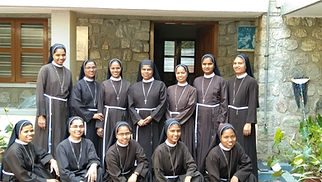

Our Mission in the Church
We are fully aware that the responsibility of proclaiming Christ is not so much that of the individual religious as of the whole community.
We take an active part in spreading the Gospel, proclaiming penitence to everyone, “without which no one can be saved”, so as to lead everyone to accept the divine gift of peace.(C.13.1)


The Places of Our Apostolate
The primary place of our apostolate is our own community, where each of us ought to have a maternal love for others, mindful of the exhortation of St. Francis: “Let each of you love and nourish your brother as a mother loves and nourishes her child”.
Following the example of the first Christians, we seek to “encourage each other in charity and good works”, “teaching and admonishing one another in all wisdom”, correcting each other as sisters, “edifying one another” and “consoling each other with the consolation with which we ourselves are consoled by God” (C.14.1)
Education
With love, devotion and a sense of responsibility, we dedicate ourselves to the work of education, giving attention to “permeating the whole of human culture with the message of salvation, so that the knowledge of the world, life and humanity, progressively acquired by the students, might be totally enlightened by the faith”


The Places of Our Apostolate
In a spirit of humility, we offer our collaboration to parish priests, especially in the area of the catechesis of children and young people and other initiatives of human promotion and solidarity.
Aware of the great suffering and many forms of misery present in our world, we, as workers of peace and messengers of perfect joy, offer assistance to those who are suffering, to the poor and to those on the periphery of society, sharing in their pain, as Mary did with her Son on Calvary. We also see in them the person of Jesus, who assures us: “As long as you did it for one of these, the least of my brethren, you did it for me

We can see that Francis transformed totally, his way of thinking and acting, after meeting the leper (he himself says in his Testament: what was bitter returned-it for me sweetness of soul and body), after listening to the Gospel in the Church (he came to acclaim: "this is what I want, this is what I wish, this is what I desire with all my heart"), after listening to the voice of the Crucifix in the Church of San Damiano (from that time Francis begins the reconstruction of the churches ) and finally, when the brothers arrived to join with him (in fact, he did not continue his life as it was understood since then, but desiring to know what God wanted from him, he is behind the Pope and he has got the blessing to live with his brothers, in fraternity).
St. Francis taught everyone to do and to preach the Gospel, to do and to preach the penance.
As Franciscan Sisters, we are called to do the same way: once we met with Christ, Poor and Crucified, listening to the Word of God, by daily prayer and meditation, by fraternal life and apostolic activities, we walk on the horizon of Holiness.
The personal encounter with Christ, the daily meditation, help to bring the Franciscan sister until his brother, and through various apostolic activities, the sister has the possibility of having space to exercise the mercy and charity, fruit of the conversion, fruit of the encounter with Christ. The continuous conversion is one exercise of day to day.
The Religious vows of chastity, poverty and obedience help the religious to live with more authenticity and converting to Gospel in everyday life and, to go until our brothers meeting them with free heart, loving everyone without possessing anyone and, do everything, only and simply, because of the Gospel.
Like that, our life is a source of joy and hope, even though we can enjoy it in its fullness only in eternal life!
